Overview
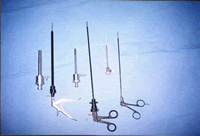
Laparoscopic surgery is a minimally invasive approach in which the surgeon works through small incisions using a camera, fine instruments, and specialized access devices. It is commonly used in general surgery, urology, gynecology, bariatric surgery, and selected cancer procedures when the patient and condition are suitable.
For international patients, the important step is not only finding a surgeon with laparoscopic experience, but also confirming that the hospital has the right imaging, anesthesia, intensive care, infection-control, and recovery support for the specific operation.
What Is Laparoscopic Surgery?
In laparoscopy, the operating field is viewed on a monitor through a small camera. The technique can reduce incision size compared with open surgery, but the final recommendation depends on diagnosis, disease extent, previous operations, medical fitness, and surgeon assessment.
Patients should share recent reports, imaging, medication details, and earlier surgery notes before travel so the specialist can decide whether a laparoscopic, robotic, endoscopic, or open approach is appropriate.
Benefits Of Laparoscopic Procedures Are
When suitable, laparoscopic procedures may support smaller incisions, reduced wound discomfort, shorter hospital stay, and earlier mobilization. These benefits are not automatic for every patient, so they should be discussed case by case with the treating surgeon.
A good care plan should explain the expected procedure, possible conversion to open surgery, hospital stay, warning signs, diet or activity restrictions, and the follow-up schedule after returning home.
Why Perform Laparoscopy?
Laparoscopy may be used for diagnosis, staging, biopsy, repair, removal of diseased tissue, or reconstruction depending on the condition. It is often selected when direct visualization and minimally invasive access can help the surgeon complete the procedure safely.
Here Are A Few Common Examples Of Laparoscopy?
Common examples include gallbladder surgery, hernia repair, bariatric procedures, appendectomy, selected bowel procedures, gynecologic procedures, urologic surgery, and diagnostic laparoscopy. The exact option depends on the diagnosis and the hospital team's review.
Advanced Laparoscopic Surgery With Hand-Access Devices
Some complex operations use hand-access or hybrid techniques, allowing the surgeon to combine minimally invasive visualization with additional tactile control. Patients should ask why this approach is being recommended, what alternatives exist, and how recovery will be monitored.
Care Planning Checklist
Before confirming treatment, patients should share recent reports, imaging, prescriptions, allergy details, previous discharge summaries, and a short timeline of symptoms or diagnosis. This helps the hospital team give a clearer medical opinion and a more realistic cost estimate.
Patients should also confirm the expected hospital stay, attendant needs, visa documents, airport transfers, accommodation near the hospital, payment inclusions, and what may change if extra tests or a longer stay are required.
Follow-up planning should be discussed before travel. Ask what warning signs need urgent attention, when flying is usually reviewed, how medicines or dressings will be managed, and how the treating team will coordinate after the patient returns home.