
 New Zealand
 India

Understanding the Condition
1What Is Gastrointestinal and Colorectal Surgery?
Gastrointestinal and colorectal surgery covers procedures performed on the stomach, small intestine, colon, rectum and anus. The objective depends on the diagnosis: removing a tumour, treating inflammatory bowel disease, repairing a hernia, correcting an obstruction, or treating conditions of the anus and rectum such as haemorrhoids or fistulas. Many of these procedures can now be performed laparoscopically or robotically rather than through large open incisions, depending on the diagnosis, its extent, and whether the surgery is planned or urgent.
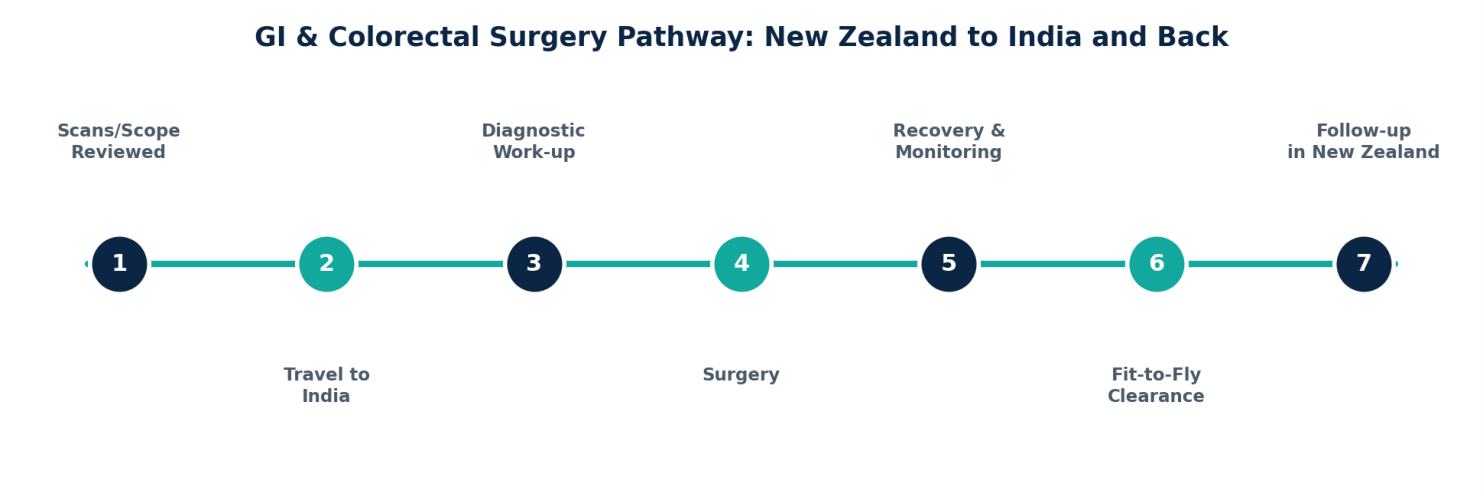
2Common Conditions for Which New Zealand Patients May Consider GI/Colorectal Surgery in India
Colorectal Cancer
Cancer of the colon or rectum is typically treated with surgical removal of the affected segment, often combined with chemotherapy depending on stage.
Stomach (Gastric) Cancer
Treatment may involve partial or total removal of the stomach, frequently combined with chemotherapy before or after surgery.
Inflammatory Bowel Disease (Crohn’s Disease and Ulcerative Colitis)
Selected patients with disease not controlled by medication, or with complications such as strictures or fistulas, may require surgery to remove the affected bowel segment.
Diverticular Disease
Inflammation or complications of diverticula (small pouches in the colon wall) may require surgery when recurrent, severe, or complicated by abscess or perforation.
Haemorrhoids and Anorectal Conditions
Haemorrhoids, anal fissures, fistulas, and abscesses are common conditions treated with a range of options from conservative management to minor surgical procedures.
Abdominal Wall and Hiatal Hernias
Hernias of the abdominal wall or at the junction of the stomach and oesophagus may require surgical repair, often laparoscopically.
Bowel Obstruction and Adhesions
Blockages of the bowel, sometimes related to previous surgery, may require surgical treatment when they do not resolve with conservative management.
Gallbladder and Appendix Disease
Gallstone disease and appendicitis are among the most common reasons for gastrointestinal surgery, usually treated laparoscopically.
3Does Every Condition Need Surgery?
No. This is one of the most important principles for a New Zealand patient considering travelling overseas. Depending on the diagnosis, appropriate non-surgical treatment may include:
- Medication for inflammatory bowel disease, ulcers, or reflux
- Dietary and lifestyle modification
- Endoscopic treatment (such as polyp removal during colonoscopy) instead of surgery for selected early lesions
- Non-surgical management of haemorrhoids (diet, topical treatment, banding)
- Interval monitoring for small, stable, asymptomatic findings
A finding on colonoscopy, endoscopy or imaging does not automatically mean surgery is necessary. A gastrointestinal or colorectal specialist should evaluate whether the diagnosis, symptoms, and overall health justify surgery, and how extensive it needs to be.
Diagnosis & Decision
4When May Surgery Be Recommended?
- A tumour is confirmed and surgery offers the best chance of complete removal
- Bowel disease is causing obstruction, perforation, or bleeding not controlled by other treatment
- Inflammatory bowel disease has not responded to medical therapy or has caused complications
- A hernia is causing pain, growing, or at risk of becoming trapped (strangulated)
- Anorectal conditions are causing persistent symptoms not relieved by conservative treatment
5Warning Signs New Zealand Patients Should Not Ignore Before Travelling to India
- Severe abdominal pain, especially if sudden or worsening
- Persistent vomiting or inability to pass stool or gas
- Rectal bleeding, especially if heavy or persistent
- Unexplained weight loss
- A hernia that becomes hard, painful and cannot be gently pushed back
- Fever with abdominal pain
A patient with severe abdominal pain, signs of bowel obstruction, or a strangulated hernia should seek immediate local emergency care in New Zealand rather than delaying to arrange overseas treatment.
6Tests Usually Required Before GI/Colorectal Surgery
Colonoscopy/Endoscopy
Direct visual examination of the bowel or stomach, often allowing biopsy or removal of polyps at the same time.
CT or MRI Scan
Provides detailed imaging of the abdomen to assess the extent of disease and any spread.
Biopsy and Histopathology
Confirms the diagnosis and provides information about tumour type where relevant.
Tumour Markers
Blood tests that may support diagnosis and monitoring for selected GI cancers.
Blood Tests and Nutritional Assessment
Assess general health, anaemia, and nutritional status, particularly important before major bowel surgery.
Surgery Options
7Major Types of GI and Colorectal Surgery Available in India
Laparoscopic Colorectal Resection
Minimally invasive removal of the affected segment of colon or rectum, reconnecting the healthy ends where possible.
Robotic Colorectal Surgery
Robotic-assisted precision for selected rectal cancer and complex colorectal cases, particularly useful in the confined space of the pelvis.
Gastrectomy (Partial or Total)
Surgical removal of part or all of the stomach for selected gastric cancers or other conditions.
Stoma Formation and Reversal
Creation of a temporary or permanent opening (colostomy or ileostomy) to divert bowel contents, used in selected cases to protect a healing bowel join or when a segment cannot be reconnected.
Hernia Repair
Laparoscopic or open repair of abdominal wall or hiatal hernias, often reinforced with surgical mesh.
Anorectal Surgery
Procedures for haemorrhoids, fistulas, fissures, and abscesses, ranging from minor office-based treatments to surgical repair.
8Minimally Invasive and Robotic GI Surgery
Many gastrointestinal and colorectal procedures that once required large open incisions can now be performed laparoscopically or robotically, potentially reducing pain, blood loss, and recovery time in appropriately selected patients. Robotic assistance is particularly valued in rectal cancer surgery, where the confined space of the pelvis benefits from enhanced precision. Larger, more advanced, or emergency cases may still require an open approach for safety.
9Enhanced Recovery After Surgery (ERAS) Protocols
Advanced Indian GI surgical centres increasingly use Enhanced Recovery After Surgery (ERAS) protocols — structured programmes covering nutrition, pain control, and early mobilisation designed to speed recovery after bowel surgery. A useful question for New Zealand patients is not just “Which technique will be used?” but “What recovery protocol will be followed, and how does it affect how quickly I can return to normal eating and activity?”
Can my scans be reviewed before I travel from New Zealand?
Risks & Recovery
10Risks and Possible Complications of GI and Colorectal Surgery
- Infection
- Bleeding
- Anastomotic leak (leakage from a bowel reconnection)
- Bowel obstruction from adhesions
- Need for a temporary or permanent stoma
- Injury to nearby organs
- Delayed return of bowel function
- Anaesthesia-related complications
- Wound complications, including hernia at the incision site
- Need for further surgery
The risk profile of a straightforward laparoscopic gallbladder or appendix removal is very different from that of major colorectal cancer surgery or complex inflammatory bowel disease surgery. Patients should request procedure-specific risk information rather than relying on generic complication percentages.
11Recovery After Surgery
Early Phase
- Pain control
- Monitoring of bowel function and wound
- Early mobilisation to reduce complications
- Gradual reintroduction of diet as bowel function returns
- Stoma care education if applicable
Following Weeks
- Progressive return to normal diet
- Wound care
- Activity increase as advised
- Medication adjustment
- Monitoring for delayed complications
Longer-Term Recovery
Recovery from minor laparoscopic procedures such as gallbladder or appendix removal is typically measured in one to two weeks, while recovery from major colorectal or gastric surgery typically takes six to eight weeks, with further time needed if chemotherapy or stoma reversal is planned.
12Recovery Support and Nutritional Rehabilitation
- Nutritional counselling, particularly after gastric or extensive bowel surgery
- Stoma care and support where applicable
- Gradual return to normal activity
- Pelvic floor support after certain rectal surgery
- Psychological support where relevant
- Long-term surveillance planning for cancer patients
13When Can Patients Return to Work?
This depends heavily on the extent of surgery and occupation. Laparoscopic gallbladder or appendix removal often allows return to desk-based work within one to two weeks, while major colorectal or gastric surgery typically requires six to eight weeks, longer for physically demanding roles or if further treatment is planned.
Travel Home & Follow-Up
14How Long Should a New Zealand Patient Remain in India After GI/Colorectal Surgery?
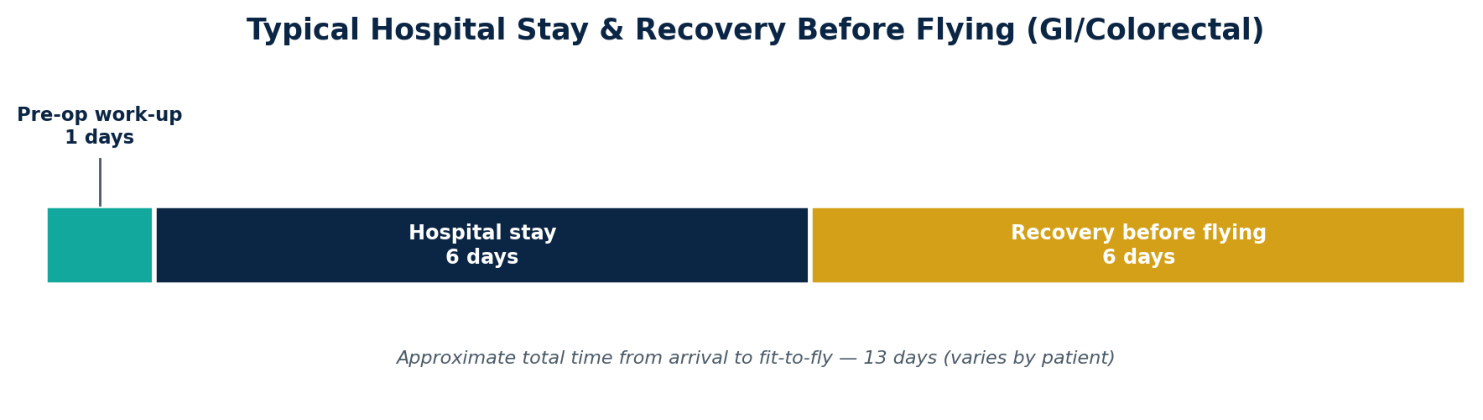
The appropriate period depends heavily on the extent of surgery. A straightforward laparoscopic procedure may allow travel home within a week, while major colorectal or gastric resection requires a longer stay for bowel function to return safely and for wound healing to be confirmed before the treating team clears the patient to fly. A New Zealand patient should not book an inflexible return flight based solely on the expected hospital discharge date.
15Flying Back to New Zealand After GI/Colorectal Surgery in India
- Fit-to-fly clearance from the treating surgical team
- Confirmation that bowel function has returned adequately
- Wound and stoma assessment before flying if applicable
- Hydration
- Blood-clot prevention
- Medication timing
- Dietary planning for the journey
- Airport wheelchair assistance if needed
Patients with a new stoma or recovering from major bowel surgery may need specific guidance on dietary precautions and supplies for the journey home.
16What Medical Information Should You Take Back to New Zealand from India?
- Discharge summary
- Complete operative report
- Final diagnosis and histopathology if applicable
- Relevant imaging and endoscopy reports
- Stoma details and supplies information if applicable
- Medication list
- Chemotherapy plan if applicable
- Follow-up and surveillance schedule
- Emergency warning signs
- Treating surgical team’s contact/follow-up pathway
17Follow-Up After Returning to New Zealand from India
- Wound assessment
- Stoma care follow-up and planning for reversal if applicable
- Coordination of any planned chemotherapy
- Colonoscopy or imaging surveillance if relevant
- Medication review
- Nutritional follow-up
- Long-term cancer surveillance planning if applicable
18How Successful Is This Surgery?
There is no meaningful single “success rate” for gastrointestinal and colorectal surgery. Outcomes depend on the specific diagnosis, stage of disease if cancer is involved, extent of surgery, and overall health. The expected outcome of a routine gallbladder removal cannot reasonably be compared with major colorectal cancer surgery or complex inflammatory bowel disease surgery. Patients should be cautious about websites offering one universal success percentage.
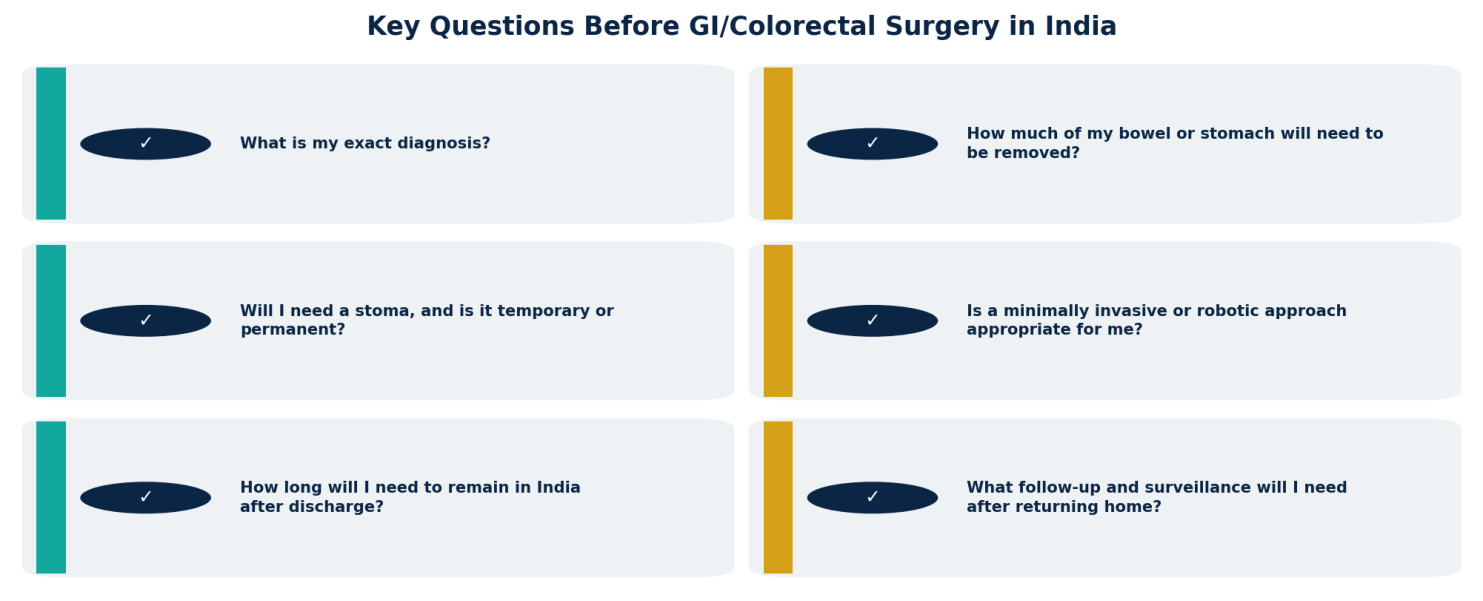
19Questions New Zealand Patients Should Ask Before Agreeing to Surgery in India
- What is my exact diagnosis?
- How much of my bowel or stomach will need to be removed?
- Will I need a stoma, and is it temporary or permanent?
- Is a minimally invasive or robotic approach appropriate for me?
- What are the major risks in my specific case?
- How frequently does this team perform this exact procedure?
- Will I need chemotherapy or other treatment in addition to surgery?
- How long will I be hospitalised, and how long in India afterward?
- When will I be fit to fly back to New Zealand?
- What follow-up and surveillance will I need after returning home?
?Frequently Asked Questions About GI & Colorectal Surgery for New Zealand Patients in India
1Can my scans and biopsy results be reviewed before I travel from New Zealand?
Often, yes. Digital imaging, endoscopy reports and pathology can be reviewed remotely for an initial opinion, though a definitive surgical plan usually requires in- person evaluation.
2Does every case of diverticulitis or haemorrhoids need surgery?
No. Many cases are managed with diet, medication, or minor procedures; surgery is generally reserved for recurrent, severe, or complicated cases.
3Will I definitely need a stoma?
Not necessarily. Many bowel resections can be reconnected during the same operation; a stoma is used selectively, often temporarily, to protect the healing bowel in specific situations.
4Is robotic or laparoscopic surgery available for colorectal cancer in India?
Yes, at selected advanced centres, for appropriately selected cases and stages.
5How soon can I fly back to New Zealand?
There is no universal timeframe. Your surgical team should clear you for travel based on bowel function recovery, wound healing, and overall stability.
6What if I have already had bowel surgery before?
Further or revision treatment is often still possible. Send previous operative records, pathology, and imaging for assessment.
7Will I need chemotherapy as well as surgery?
This depends entirely on the diagnosis and stage; your multidisciplinary team will advise on the full treatment sequence if cancer is involved.
8Should I choose a hospital based on its technology alone?
No. Team experience with your specific condition, correct diagnosis, and postoperative care remain fundamental.
Key Takeaway for New Zealand Patients Planning GI & Colorectal Surgery in India
Travelling from New Zealand to India for gastrointestinal or colorectal surgery is a significant decision, particularly when cancer or inflammatory bowel disease is involved. The most important step is obtaining a precise diagnosis and understanding exactly how extensive the surgery needs to be, including whether a stoma will be required. For a New Zealand patient, the plan should also address recovery in India, coordination of any further treatment such as chemotherapy, fitness for travel, and a clear long-term follow-up and surveillance pathway once home.
Sources & Further Reading
The following government and medical-authority resources provide independent, publicly available information on this topic:
- Colon Cancer Treatment — National Cancer Institute (NIH)
- Crohn’s Disease — National Institute of Diabetes and Digestive and Kidney Diseases (NIH)
- Treatment for bowel cancer — NHS (UK National Health Service)
- Colorectal Cancer Basics — Centers for Disease Control and Prevention (US)
Citation Block: New Zealand Patients — GI & Colorectal Surgery in India
| Field | Details |
|---|---|
| Topic | Gastrointestinal and Colorectal Surgery in India for New Zealand Patients — Complete Clinical & Surgical Guide (Page 1) |
| Patient Group | Patients travelling from New Zealand to India for gastrointestinal and colorectal surgery |
| Conditions Covered | Colorectal cancer, stomach (gastric) cancer, inflammatory bowel disease, diverticular disease, haemorrhoids and anorectal conditions, hernias, bowel obstruction, gallbladder and appendix disease |
| Procedures Covered | Laparoscopic colorectal resection, robotic colorectal surgery, gastrectomy, stoma formation and reversal, hernia repair, anorectal surgery |
| Key Tests | Colonoscopy/endoscopy, CT or MRI scan, biopsy and histopathology, tumour markers, blood tests and nutritional assessment |
| Typical Hospital Stay | 4–8 days after major GI/colorectal surgery |
| Arrival to Fit-to-Fly | Approximately 13 days (varies by patient) |
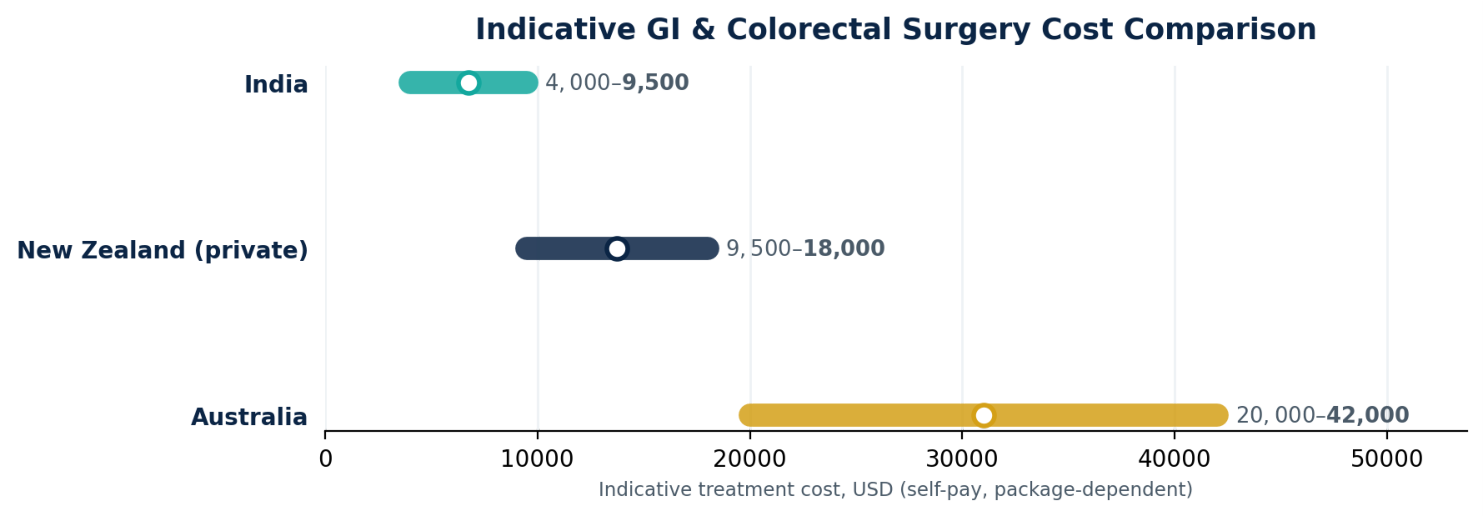
| Indicative Cost in India | US$4,000–9,500 (self-pay, package-dependent) |
| Cost Saving | 50–70% vs. Australia, package-dependent |
| Reviewed By | Medical Experts at Forerunners Healthcare Team · 23 October 2026 |
Gastrointestinal and Colorectal Surgery in India for New Zealand Patients — Complete Clinical & Surgical Guide (Page 1)
Patients travelling from New Zealand to India for gastrointestinal and colorectal surgery
Colorectal cancer, stomach (gastric) cancer, inflammatory bowel disease, diverticular disease, haemorrhoids and anorectal conditions, hernias, bowel obstruction, gallbladder and appendix disease
Laparoscopic colorectal resection, robotic colorectal surgery, gastrectomy, stoma formation and reversal, hernia repair, anorectal surgery
Colonoscopy/endoscopy, CT or MRI scan, biopsy and histopathology, tumour markers, blood tests and nutritional assessment
4–8 days after major GI/colorectal surgery
Approximately 13 days (varies by patient)
US$4,000–9,500 (self-pay, package-dependent)
50–70% vs. Australia, package-dependent
Medical Experts at Forerunners Healthcare Team · 23 October 2026
New Zealand Patients — Ready to Take the First Step?
Share your scans, endoscopy and pathology reports for a MEDICAL CONSULTATION.