Hydrocephalus - An Introduction

The term hydrocephalus is derived from the Greek words "hydro" meaning water and "cephalus" meaning head. As the name suggests, it is a condition in which excessive accumulation of fluid in the brain. The excess fluid causes the spaces in the brain, called ventricles, to expand which results in potentially harmful pressure on the tender tissues of the brain. Hydrocephalus can be fatal if not treated on time. Once known as "water on the brain," the "water" is actually cerebrospinal fluid (CSF), a clear fluid surrounding the brain and spinal cord. Hydrocephalus affects a wide range of people from infants and older children to young, middle-aged and older adults.
Symptoms Of Hydrocephalus
The signs and symptoms of hydrocephalus vary by age group and disease progression.
In infants, common signs and symptoms of hydrocephalus include:
In older children and adults, common signs and symptoms of hydrocephalus include:
Types Of Hydrocephalus
- ACongenital Hydrocephalus - Congenital hydrocephalus can cause by genetic factors or it can cause by other environmental influences during fetal development. This type of hydrocephalus can occur before during or soon after birth.
- BAcquired Hydrocephalus - This type of hydrocephalus occurs later in the life by some injuries or disease. It can affect people of all ages.
- CCommunicating Hydrocephalus - In this state cerebrospinal fluid (CSF) cannot circulate properly. Although it flows normally between the four ventricles but is blocked after it exits the ventricles.
- DNon-Communicating Hydrocephalus - This is also called Obstructive Hydrocephalus that develops when the flow of CSF is blocked along one or more of the narrow pathways connecting the ventricles and CSF cannot circulate properly.
- ENormal Pressure Hydrocephalus (NPH) - There are two types of NPH – diopathic NPH - In Idiopathic NPH as name suggests it happens because of unknown cause. PH of Known Cause - Other NPH can happen because of head trauma infections tumour and surgery.
Hydrocephalus is sometimes present at birth (Congenital hydrocephalus), although it may develop later at any age (Acquired hydrocephalus).
Causes Of Hydrocephalus
The causes of hydrocephalus are not entirely clear to scientists. The condition may result from genetic inheritance (this is called aqueductal stenosis -- the narrowing of a specific pathway in the brain) or developmental disorders, such as those associated with neural tube defects like spinal bifida and encephalocele.
Other possible hydrocephalus causes include:
- AComplications associated with premature birth, such as intraventricular hemorrhage
- BConditions such as meningitis, tumors, or traumatic head injury
- CSubarachnoid hemorrhage blocking the exit from the ventricles to the cisterns and eliminating the cisterns themselves.
Find List Of Best Hydrocephalus Surgery Treatment Hospitals Of India
The Best Hospitals for Hydrocephalus Surgery in India perform advanced neurology surgery in treatment centres with the most updated technology. They offer the most efficient treatment options at an affordable cost and thus attract many foreign patients from across the world. Some of the top hospitals for hydrocephalus surgery in infants and in adults are:
 Manipal Hospital (Old Airport Road), Bangalore
 Global Hospital, Mumbai
 Fortis Memorial Research Institute (FMRI), Gurgaon
 Fortis Hospital (Bannerghatta Road), Bangalore
 Artemis Hospital, Gurugram
 Saifee Hospital, Mumbai
 Medanta - The Medicity, Gurugram
 Max Super Speciality Hospital, Delhi
 Kokilaben Dhirubhai Ambani Hospital, Mumbai
 Jaslok Hospital, Mumbai
BLK Max Super Speciality Hospital, Delhi
Jaslok Hospital, Mumbai
BLK Max Super Speciality Hospital, Delhi
 Indraprastha Apollo Hospital, Delhi
Diagnosis Of Hydrocephalus
To diagnose Hydrocephalus, a physician considers the patient's medical history, symptoms, results of the physical exam, and certain imaging tests or procedures. Tests used to diagnose hydrocephalus can include:
- AUltrasound
- BComputed tomography (CT scan)
- CMagnetic resonance imaging (MRI)
- DPressure-monitoring techniques.
The tests that the doctor recommends are based on the patient's age, clinical presentation, and the presence of known or suspected problems of the brain or spinal cord.
Hydrocephalus Treatment
The goal of treatment is to reduce or prevent brain damage by improving the flow of CSF.
Surgery is the main treatment. The blockage may be surgically removed, if possible. If the blockage cannot be removed, a shunt may be placed within the brain to allow CSF to flow around the blocked area
Types Of Hydrocephalus Surgery
Shunt Placement: The most common treatment for hydrocephalus is the surgical insertion of a drainage system, called a shunt. It consists of a long flexible tube with a valve that keeps fluid from the brain flowing in the right direction and at the proper rate. One end of the tubing is usually placed in one of the brain's ventricles. The tubing is then tunneled under the skin to another part of the body where the excess cerebrospinal fluid can be more easily absorbed — such as the abdomen or a chamber in the heart.
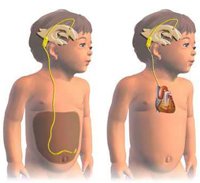
People who have hydrocephalus usually need a shunt system for the rest of their lives, so additional surgeries may be needed to insert longer tubing to match a child's growth. Revisions to the shunt also may be needed if the tubing becomes blocked or infected.
Ventriculostomy: This surgical procedure is sometimes used when there is an obstruction of flow between ventricles. In the procedure, your surgeon makes a hole in the bottom of one of the ventricles, to allow the cerebrospinal fluid to flow toward the base of the brain, where normal absorption occurs.
Endoscopic Third Ventriculostomy: In some cases of adult hydrocephalus we are able to determine that there is a CSF blockage that can be potentially bypassed using an endoscopic surgery. In this type of shunt surgery, an endoscopic camera and microinstruments are manipulated through a minimally invasive, computer guided approach into the ventricle. A small hole is made in the floor of the third ventricle, allowing CSF to flow out of the brain. When successful, this type of surgery corrects the hydrocephalus without requiring a shunt implantation.
Benefits Of Hydrocephalus Surgery And Radiotherapy
The success of shunts in treatment of hydrocephalus varies from person to person; some people recover almost completely after treatment and have a good quality of life. Early diagnosis and treatment improve the chance of a good recovery. In the last 50 years, there have been incremental advancements in the diagnosis and treatment of hydrocephalus, however, often repeated neurosurgical operations are necessary to treat hydrocephalus. A shunt is designed to control the amount of flow and pressure of CSF out of the brain ventricles and this surgery has shown great results. Despite the problems associated with shunts, at present they are still the best option for most children. Promising new technology includes shunts with valves that can be externally programmed postoperatively and a procedure that uses an endoscope to visualize the blockage and open it, making a shunt unnecessary. Improvements reported by the patient and the patient's family, shows good results of treatment of Hydrocephalus. Most children with hydrocephalus that survive for 1 year will have a fairly normal life span. Approximately a third will have normal intellectual function, but neurological difficulties may persist.
Complications Involved In Hydrocephalus Surgery
Certain risks must be considered with any surgery. Although your surgeon will take every precaution to avoid complications, among the most common risks possible with shunt surgery are: infection, malfunction, disconnection, or obstruction. The sudden release of CSF during or after surgery can cause a subdural hematoma (blood clot) to form. Other possible risks include hemorrhage (excessive bleeding) within the brain.
Hydrocephalus Surgery And Treatment In India
Around a million medical tourists travel to India to avail the benefits of the treatment facilities that India offers.India offers a wide range of treatment solution and has become a medical tourism center of the world. Treatment and surgery of Hydrocephalus in India is attracting people from different parts of the world. India has a pool of experienced and skilled neurologists and neurosurgeons. They specialize in identifying and diagnosing different types of brain conditions. Treatment programs that are offered in India have a high success rates, with comparatively minimal complications.

India's growing economy has allowed many developments in the country which has enabled many hospitals to have highly effective and advanced equipments of treatment. The doctors, surgeons, nurses and other medical professionals are highly experienced and skilled at their work. Most of the hospitals are directly or indirectly associated with centers offering alternative therapies like, yoga, naturopathy, etc. Travel and accommodation is also easily accessible in India.
Why Us?
India is considered to be one of the largest country for overseas neurosurgery. Forerunners healthcare in India provide one the most extensive healthcare facilities at an affordable cost. Some of the countries from which patients travel to India includes USA, UK, Canada, Kenya, Bangladesh. Flow diverter stents are been operated in India under the best neurosurgeons in India. Extensive research in the area of neurosurgery has opened different doorways towards human healthcare. Being one of the most challenging and complex areas of modern medicine neurological studies.
Cities in India that offers Hydrocephalus Surgery at some of the top and world class hospitals are as follows;
| Mumbai | Hyderabad | Kerala |
|---|---|---|
| Delhi | Pune | Goa |
| Bangalore | Nagpur | Jaipur |
| Chennai | Gurgaon | Chandigarh |

 United States
 United Kingdom
 Canada
 Australia
 New Zealand
 Nigeria
 Kenya
Kenya Ethiopia
 Uganda
 Tanzania
 Zambia
 Congo
Congo Sri Lanka
 Bangladesh
 France
 Afghanistan
 Nepal
Nepal Uzbekistan