
Overview
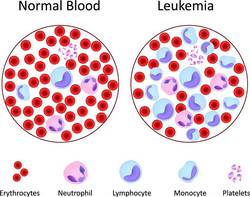
For getting safe and risk-aware surgical treatment in India you would require selecting an expert surgeon. Leukemia literally means ‘many white cells in the blood’.
The white cells are part of the body’s immune system, and there are several sub-groups of white cells that have different sorts of roles in recognizing and dealing with ‘invaders’ such as bacteria and viruses as well as other types of foreign protein.
All of the blood cells originate in the bone marrow and leukemia which is also known as blood cancer is a disease where the bone marrow produces large numbers of abnormal white cells. This means that the normal marrow is pushed into smaller and smaller areas. This results in fewer normal cells being produced and gives rise to some of the symptoms.
It is possible to have chronic leukemia for months or even years without knowing it. The symptoms are varied, but many people notice different symptoms like tiredness, bruising easily, repeated infections, enlarged lymph glands, weight loss, night sweats, and fever. These are most common symptoms appear when patient suffers from chronic leukemia.
The surgical procedure of chronic leukemia surgery is very complex and it requires an experienced cancer surgeon for the treatment. There are many types of leukemia, each of which is classified according to the exact cell type affected by the disease. One of the most common types of leukemia, acute leukemia, must be treated right away because of how quickly the cancer progresses.
The main objective of treatment is to bring about remission, leaving no trace of the disease. During remission, more therapy is given to the patient to prevent relapse. When treated early, many people with acute leukemia are cured. The second most common type of leukemia, chronic leukemia, may not require immediate treatment because disease progression is slower.
However, it is imperative for those with this type of leukemia to have frequent checkups in order to monitor the disease. When treatment is needed it is often used to control the disease and symptoms. Chronic leukemia is a slowly progressive form of leukemia and tends to involve more mature cell types.
It may not need treatment immediately, but if treatment is required it is usually chemotherapy, given in the form of tablets.
Diagnosis And Staging
Leukemia surgery in India is available in most prominent cities of India at Mumbai, Delhi, Chennai and Hyderabad and that too at less cost with the international medical and healthcare facilities and one can also enjoy the exotic vacations in India with the help of medical tourism.
Cancer hospitals in India ensure international patients for a successful outcome and fast leukemia treatment India. The most common treatment includes chemotherapy followed by a bone marrow transplant.
Medical tourism in India takes care of all the things required to patients coming to India for their surgery. So abroad natives can rely upon the quality of medical treatment in India and get their leukemia surgery at advanced cancer hospitals of Delhi, Mumbai and Chennai.
What Patients Should Confirm
Patients should confirm the diagnosis, stage, biopsy summary, imaging reports, and whether the plan includes surgery, chemotherapy, radiation, targeted therapy, or a combination.
Before requesting a medical opinion, keep recent reports, imaging files, discharge summaries, prescriptions, and a short symptom timeline ready. This helps the specialist review the case without unnecessary back-and-forth.
Travel And Follow-Up Planning
International patients should ask about visa documents, attendant needs, estimated hospital stay, nearby accommodation, fitness-to-fly advice, and how follow-up will continue after returning home.
Forerunners Healthcare can coordinate hospital options, doctor review, appointment planning, travel support, and cost estimates while keeping the final medical decision with the treating specialist.
Care Planning Checklist
Before confirming treatment, patients should share recent reports, imaging, prescriptions, allergy details, previous discharge summaries, and a short timeline of symptoms or diagnosis. This helps the hospital team give a clearer medical opinion and a more realistic cost estimate.
Patients should also confirm the expected hospital stay, attendant needs, visa documents, airport transfers, accommodation near the hospital, payment inclusions, and what may change if extra tests or a longer stay are required.
Follow-up planning should be discussed before travel. Ask what warning signs need urgent attention, when flying is usually reviewed, how medicines or dressings will be managed, and how the treating team will coordinate after the patient returns home.






































