Plan Your Hysterectomy Surgery In India With Forerunners Healthcare Consultants
Hysterectomy is the removal of the uterus in the female body, to avert the chances of cancer or other problems. Forerunners Healthcare Consultants is the strongest link between the best Hysterectomy Surgery Hospitals in India and the offshore patients. A person only has to send us a query and we shall take care of the rest.
Overview
A Hysterectomy Surgery can simply mean removal of the uterus, or it can mean removal of the uterus, cervix and ovaries. Although hysterectomy is frequently performed for fibroids (benign tumor-like growths inside the uterus itself made up of muscle and connective tissue), conservative options in treatment are available by doctors who are trained and skilled at alternatives. In 2003, over 600,000 hysterectomies were performed in the United States alone, of which over 90% were performed for benign conditions. Such rates being highest in the industrialized world have led to the major controversy that hysterectomies are being largely performed for unwarranted and unnecessary reasons.
What Is Hysterectomy Surgery?
A Hysterectomy Surgery refers to an operation where a woman's uterus is surgically removed. This procedure spells the end of a woman's ability to become a mother biologically. This may seem a rather drastic step to take, especially for women who want to have children. However, a hysterectomy becomes essential under certain circumstances. The term Hysterectomy is from Greek ὑστέρα hystera "womb" and εκτομία ektomia "a cutting out of. It may be total (removing the body, fundus, and cervix of the uterus; often called "complete") or partial (removal of the uterine body while leaving the cervix intact; also called "supracervical"). It is the most commonly performed gynecological surgical procedure.
Why Hysterectomy Surgery?
Hysterectomy Surgery is most often performed for the following reasons:
Uterine Fibroids: Are the common, benign (non cancerous) tumors that grow in the muscle of the uterus. More hysterectomies are done because of fibroids than any other problem of the uterus. Sometimes fibroids cause heavy bleeding or pain.
Endometriosis: Is another benign condition that affects the uterus. It is the second leading reason for hysterectomies. It occurs when endometrial tissue (the inside lining of the uterus) begins to grow on the outside of the uterus and on nearby organs. This condition may cause painful menstrual periods, abnormal vaginal bleeding and loss of fertility.
Uterine prolapse: Is a benign condition in which the uterus moves from its usual place down into the vagina. Uterine prolapse is due to weak and stretched pelvic ligaments and tissues, and can lead to urinary problems, pelvic pressure or difficulty with bowl movements. Childbirth, obesity and loss of estrogen after menopause may contribute to this problem.
Cancer: is the reason for about 10 percent of all hysterectomies. Endometrial cancer, uterine sarcoma, cervical cancer, and cancer of the ovaries or fallopian tubes often require hysterectomy. Depending on the type and extent of cancer, other kinds of treatment such as radiation or hormonal therapy may be used as well.
Hyperplasia: Is believed to come from too much estrogen and occurs when the lining of the uterus becomes too thick and causes abnormal bleeding.
Other reasons why hysterectomies are done include chronic pelvic pain, heavy bleeding and chronic pelvic inflammatory disease.
How Is The Diagnosis For Hysterectomy Surgery Performed?
The diagnosis of the surgery is as follows - Before having a Hysterectomy Surgery for pelvic pain, women usually undergo more limited (less extensive) exploratory surgery procedures (such as laparoscopy) to rule out other causes of pain. Prior to having a hysterectomy for abnormal uterine bleeding, women require some type of sampling of the lining of the uterus (biopsy of the endometrial) to rule out cancer or pre-cancer of the uterus. This procedure is called endometrial sampling. Also, pelvic ultrasounds and/or pelvic computerized tomography (CT) tests can be done to make a firm diagnosis. In a woman with pelvic pain or bleeding, a trial of medication treatment is often given before a hysterectomy is considered.
What Are The Types Of Hysterectomy Surgery?
There are three main types of Hysterectomy Surgery, which are as under:
Radical Hysterectomy: The uterus, cervix and ovaries are removed.
Total Hysterectomy: The uterus and the cervix are removed.
Subtotal or Partial hysterectomy: The upper portion of the uterus is removed, leaving the cervix and ovaries intact.
And, there are several ways the surgery can be performed -- some methods more invasive than others:
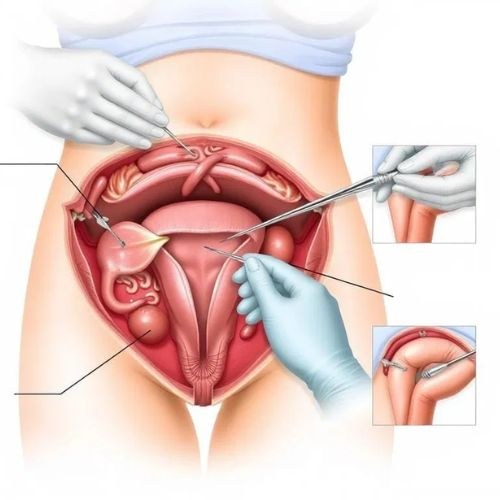
Laparoscopic Assisted Hysterectomy: This is any hysterectomy using the vaginal approach with assistance from laparoscopic instruments inserted through tiny incisions in the abdomen.
Vaginal Hysterectomy: This Hysterectomy surgery is performed entirely through an incision made in the vagina.
Abdominal Hysterectomy: This Hysterectomy surgery is performed using an incision in the abdomen that can be either vertical from the area of the pubic bone up toward the belly button, or it may be horizontal along the bikini line.
Top Hospitals For Hysterectomy Surgery In India
The top hospitals for hysterectomy surgery in India are performed by the best hysterectomy surgeons and doctors in India. Our associated hospitals are located across Mumbai, Delhi, Chennai, Gurgaon, Nagpur, Noida, Hyderabad, Ahmedabad, Bangalore and Kerala.
 Indraprastha Apollo Hospital, Delhi
 Fortis Memorial Research Institute (FMRI), Gurgaon
 Medanta - The Medicity, Gurugram
 Max Super Speciality Hospital, Delhi
 Kokilaben Dhirubhai Ambani Hospital, Mumbai
 Artemis Hospital, Gurugram
 Global Hospital, Mumbai
 Manipal Hospital (Old Airport Road), Bangalore
 Fortis Hospital (Bannerghatta Road), Bangalore
 Saifee Hospital, Mumbai
 Jaslok Hospital, Mumbai
 Lilavati Hospital & Research Centre, Mumbai
Top Hysterectomy Surgery Doctors In India
These experienced gynaecologists across India's leading hospitals perform hysterectomy and other gynaecological surgeries using advanced, minimally invasive techniques.
 Dr. Shruti BhatiaGynaecology — BLK Max Hospital, Delhi
 Dr. S JayalakshmiGynaecology — Artemis Hospital, Gurugram
 Dr. Devyani MahajanGynaecology — Nanavati Max Hospital, Mumbai
 Dr. Sandhya Yadav ShahGynaecology — Asian Heart Institute, Mumbai
 Dr. Parimala DeviGynaecology — Kauvery Hospital, Chennai
 Dr. Padmapriya VivekGynaecology — Gleneagles Hospital, Chennai
 Dr. Sherly MathenRobotic Gynaecology — Aster Medcity, Kochi
 Dr. Zareena A KhalidGynaecology — Aster Medcity, Kochi
How To Prepare For Hysterectomy Surgery?
Before you decide to have a hysterectomy, gather all of the information you can about the procedure. In addition to the different types of hysterectomies that are currently available, there are many alternatives to a hysterectomy, including non-surgical treatments and medications. There are also additional surgeries that do not require the removal of the uterus, ovaries or fallopian tubes. The following questions are designed to help you explore the type of Hysterectomy Surgery recommended for you and the alternative procedures that may be appropriate, as well as general questions that will help you make a well-informed decision.
- AIn what ways will my life be different after this surgical procedure?
- BWhat is the proper name of the procedure?
- CWhat are the risks of the surgery?
- DWhat are the risks of anesthesia?
- EAre the risks for me greater than other patients for any reason?
- FIs this procedure necessary? What will happen if I say no to have surgery?
- GWhat type of anesthesia will I be given?
- HIs this procedure a cure?
- IHow long will the benefits of the procedure last?
- JWill this be an inpatient or outpatient procedure?
- KWhat type of incision will be used? Will it be an open procedure or a minimally invasive, or laparoscopic, procedure?
- LWhat medications should I take on the morning of my surgery?
- MWhen should I stop eating prior to my procedure?
What Are The Common Types Of Hysterectomy Surgery?
A Hysterectomy Surgery takes about one to two hours. You will be under general anesthesia during the surgery. Before the procedure, an intravenous (IV) catheter will be inserted into one of your veins to deliver fluids and medications. What happens next depends on the type of hysterectomy surgery :
Abdominal Hysterectomy: The surgeon will make a 5-inch to 7-inch incision in your lower abdomen. The incision can be vertical (from the belly button to just above the pubic bone) or transverse (horizontal at the pubic-hair line, often called a "bikini incision"). The uterus is freed from its attachments to blood vessels and supportive tissues, and then is removed through the incision. Then the layers of the abdomen will be closed with sutures (stitches) and the incision may be closed with sutures or titanium (metal) staples. Staples or non-dissolving skin sutures usually are removed about one week after the surgery. The advantages of an abdominal hysterectomy are that the uterus can be removed even if a woman has internal scarring (adhesions) from previous surgery or her fibroids are large. The surgeon has a good view of the abdominal cavity and more room to work. Also, surgeons have the most experience with this type of hysterectomy. The abdominal incision is more painful than with vaginal hysterectomy and the recovery period is longer.
Vaginal Hysterectomy: With a vaginal hysterectomy, the surgeon makes an incision near the top of the vagina. The surgeon then reaches through this incision to cut and tie off the ligaments, blood vessels, and fallopian tubes. Once the uterus is cut free, it is removed through the vagina. The operation takes one to two hours. The hospital stay is usually one to three days, and the return to normal activities takes about four weeks. The advantages of this procedure are that it leaves no visible scar and is less painful. The disadvantage is that it is more difficult for the surgeon to see the uterus and surrounding tissue. This makes complications more common. Large fibroids cannot be removed using this technique. It is very difficult to remove the ovaries during a vaginal hysterectomy, so this approach may not be possible if the ovaries are involved. Any vaginal hysterectomy may have to be converted to an abdominal hysterectomy during surgery if complications develop.
Laparoscopically-Assisted Vaginal Hysterectomy (LAVH): Laparoscopically-assisted vaginal hysterectomy (LAVH) is a surgical procedure using a laparoscope to guide the removal of the uterus and/or Fallopian tubes and ovaries through the vagina (birth canal). (A different procedure, called a laparoscopic hysterectomy, is entirely performed using a laparoscope and other instruments inserted through tiny abdominal incisions, and the uterus, Fallopian tubes etc. are removed in tiny portions.) Not all hysterectomies can or should be done by LAVH. In certain situations, a laparoscopic hysterectomy (see above) may be sufficient. In other cases, an abdominal hysterectomy or a vaginal hysterectomy (without laparoscopy) is indicated. The surgeon determines the appropriate procedure for each individual case based upon the reason for the hysterectomy and the medical history and condition of the patient.
What Is The Post-operative Care Following A Hysterectomy Surgery?
Patients generally wake up feeling tired and with a certain amount of pain - this will depend on several factors, including the type of hysterectomy, the reason for it, and the state of health of the patient. Most likely the patient will also be on a drip and a urinary catheter. Some patients will notice a tube coming out of their abdomen - this is a drainage tube to take away any blood around the wound.
- AWithin a day or so patients are usually encouraged to walk; this is to reduce the risk of blood clots in the legs. By the second or third day most patients are walking around.
- BMost women who have had a vaginal hysterectomy go home after three to four days, while those who had an abdominal hysterectomy may require from five to about seven days.
- CIt is important for the patient not to put anything in her vagina for at least the first six weeks - this includes douching, tampons or having sex.
- DIn the majority of cases a follow-up appointment will be arranged for about six weeks after the operation.
- EFor a period of six to eight weeks the patient's body is recovering, and she should not carry any heavy shopping or undertake physically demanding household tasks.
What Are The Benefits Of Hysterectomy Surgery?
The Hysterectomy Benefits are great in case of uterine cancer. The symptoms of discomfort and bleeding related to fibroids, uterine prolapse and endometriosis can be relieved easily after the surgery. Hysterectomy Benefits you from severe infections of the uterus, uncontrollable bleeding and an effective and efficient treatment for the cancer of the pelvic organs. Hysterectomy is done to cure a number of ailments like the geological cancer- the cancer of the cervix or uterus; endometriosis- the tissues lining the internal part if the uterus begins to grow outside of your uterus; fibroids- tumors of the uterus that leads to bleeding; uterine prolapse- uterus starts descending in the vagina.
Other Hysterectomy benefits include prevention of ovarian cancer. It is a life-saving step because it removes effective the malignant cells causing the cancer of the ovaries. You can also have hysterectomy to cure as well as avoid fibroid tumors. Hysterectomy completely eliminates the tumors. Hysterectomy is considered as a life saving measure as it is used to cease the heavy placental bleeding at the time of child birth or for eliminating cervical cancer as well as uterine cancer.
What Are The Risks Of Hysterectomy Surgery?
The possible complications of Hysterectomy Surgery include: infections, excessive bleeding, blood clots, and adverse effect to the anesthesia. A hysterectomy is a major decision that patient should take after careful consultation with doctor. Patient should understand the reason for the operation, the benefits and risks and the alternatives to a hysterectomy.
What Is The Alternative To Hysterectomy Surgery?
Whether an alternative is appropriate for any individual woman is a decision she and her doctor should make together. Some alternative procedures to Hysterectomy Surgery include:
Embolization: During uterine artery embolization, interventional radiologists put a catheter into the artery that leads to the uterus and inject polyvinyl alcohol particles right where the artery leads to the blood vessels that nourish the fibroids. By killing off those blood vessels, the fibroids have no more blood supply, and they die off. Severe cramping and pain after the procedure is common, but serious complications are less than 5% and the procedure may protect fertility.
Myomectomy: A myomectomy is a surgery used to remove fibroids, thus avoiding a hysterectomy. Hysteroscopic myomectomy, in which a surgical hysteroscope (telescope) is inserted into the uterus through the vagina, can be done on an outpatient basis. If there are large fibroids, however, an abdominal incision is required. Patients typically are hospitalized for two to three days after the procedure and require up to six weeks recovery. Laparoscopic myomectomies are also being done more often. They only require three small incisions in the abdomen, and have much shorter hospitalization and recovery times. Once the fibroids have been removed, the surgeon must repair the wall of the uterus to eliminate future bleeding or infection.
Endometrial Ablation: In this surgical procedure, recommended for women with small fibroids, the entire lining of the uterus is removed. After undergoing endometrial ablation, patients are no longer fertile. The uterine cavity is filled with fluid and a hysteroscope is inserted to provide a clear view of the uterus. Then, the lining of the uterus is destroyed using a laser beam or electric voltage. The procedure is typically done under anesthesia, although women can go home the same day as the surgery. Another newer procedure involves using a balloon, which is filled with superheated liquid and inflated until it fills the uterus.
What Is Advance Hysterectomy Surgery Procedure?
Robotic Assisted Laparoscopic Hysterectomy: This procedure comes under the latest method of removing the uterus of women. A Robot-assisted laparoscopic hysterectomy comes with decreased postoperative intravenous analgesia requirements, shorter length of hospital stay, quicker return to work and daily activities. It is performed by the removal of the uterus using robotic system by making 4-5 small incisions and instruments are placed in the lower abdomen through “ports”. The robotic system translates the surgeon’s hand movements outside the woman’s body into precise surgical movements inside the abdomen. This system provides more flexibility of hand movements than is possible with traditional laparoscopic surgery. Hospital stay is usually overnight and recovery time is approximately 2-3 weeks. Robotic assisted laparoscopic hysterectomy also permits very efficient suturing due to the precise placement and movement of the surgical tools, as well as the magnified 3-D views of the surgical area, which allows surgeons to more accurately inspect, dissect and repair the surgical area.
Why Hysterectomy Surgery In India?
Of late, India has become a hub for foreign patients coming for various medical treatments and surgeries including the Hysterectomy Surgery . The hospitals and medical centers in India are hygienic, and maintain the highest quality of medical services and amenities making the country most preferred destination in the world.
The Hysterectomy Surgery in India comes with some of the top hospitals and through a team of highly skilled hysterectomy surgeons and doctors. India has the world class Gynecological surgeons with highly trained medical experts and skilled medical professional who deal with patients with utmost professionalism and care providing them with the low cost surgery .
The hospitals and clinics rendering Hysterectomy Surgery in India are spread all over the country with presence of more than five thousand healthcare professionals treating with the most advanced medical amenities in the world. These are available at hospitals in the following cities with latest amenities and state-of-art-facilities. These are the few of the many benefits that an International patient is availing by getting the hysterectomy surgery done in India .
| Mumbai | Hyderabad | Kerala |
|---|---|---|
| Delhi | Pune | Goa |
| Bangalore | Nagpur | Jaipur |
| Chennai | Gurgaon | Chandigarh |

 United States
 United Kingdom
 Canada
 Australia
 New Zealand
 Nigeria
 Kenya
Kenya Ethiopia
 Uganda
 Tanzania
 Zambia
 Congo
Congo Sri Lanka
 Bangladesh
 France
 Afghanistan
 Nepal
Nepal Uzbekistan